World War II Wonder Weapons: The German Viper and American Goblin
Sandboxx News ·
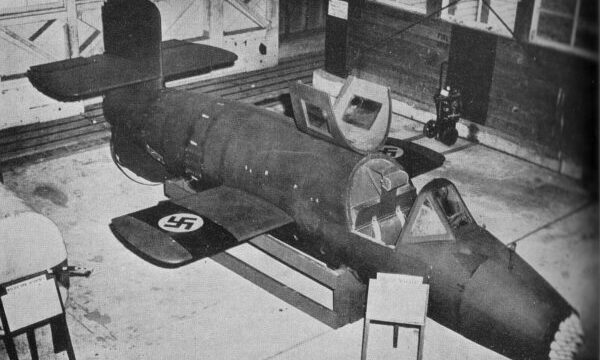
World War II profoundly transformed military technology, spurring unprecedented industrial innovation. While Nazi Germany maintained qualitative superiority with formidable tanks like the Tiger I and Panther, Allied forces ultimately prevailed through sheer mass production capabilities. As the military situation deteriorated, the Nazi regime desperately pursued futuristic Wunderwaffe, or wonder weapons, hoping to snatch victory from impending defeat. Among the most inventive and extreme projects was the Bachem Ba-349 Natter, a rocket-propelled interceptor designed to neutralize Allied strategic bombers. Conceived in late 1944 as a flying rocket launcher, testing commenced rapidly in early 1945. The historic first manned flight occurred on March 1, 1945, piloted by Lothar Sieber. He successfully ascended to approximately 1,600 feet, making history as the first person to launch a vertical rocket.
AI 시장 분석
An article covering military technology innovations by Germany and the United States during World War II. The war accelerated the development of extreme military equipment such as atomic bombs, ballistic missiles, and strategic bombers. Germany developed emergency response weapons like the Bachem Ba 349 Natter based on qualitative superiority, but failed to overcome the Allied forces' overwhelming volume. From an investor's perspective, it highlights the historical evolution of the defense industry and the importance of technological innovation.
상승 영향
- Defense — Much like the competition for advanced weapon development between Germany and the US during WWII, geopolitical conflicts and security anxieties directly drive technological investment and government budget expansions in the defense sector.
하락 영향
- Aviation — In the event of wartime situations or extreme military conflicts, commercial aviation and related transportation sectors suffer severe blows due to the destruction of aviation infrastructure and supply chain disruptions.
DYAX 전담 분석
The rapid advancement of military technology during World War II is a historical event that drove the structural growth of the defense industry. Germany's development of rocket propulsion systems and innovative aircraft demonstrates that defense technology makes exponential progress under extreme conditions, and proves that mass production capacity determines ultimate victory or defeat.
In the event of heightened geopolitical tensions going forward, the defense sector is expected to benefit, and attention must be paid to securing technological superiority and production efficiency metrics. In a bullish scenario, defense stocks rise due to increased demand for advanced weapons, while in a bearish scenario, excessive cost consumption can pressure corporate margins.
AI가 생성한 분석으로 투자 자문이 아닙니다.
DYAX Investor Sentiment
Bullish (Long) 52% · Bearish (Short) 48%
565 participants
Related News
- Trump Announces Upcoming Alaska LNG Deals and Permit Approvals at Rally
- Singapore's Q3 GDP Expands by 5.4%, Beating Expectations Despite Growth Moderation
- Asia-Pacific Equities Mixed as Markets Eye China Data and Geopolitical Shifts
- Iran Alters Tactics to Intensify Maritime Assaults Prior to US Midterms
- Australia Auctions AUD 700M in 2036 Bonds as Singapore Holds Policy
- Monetary Authority of Singapore Holds FX Settings Steady as Q3 GDP Data Mixed
