Futures Split As Blue-Wave Chip Purge Enters Day Two; Oil Rebounds, BoE Hikes
ZeroHedge ·
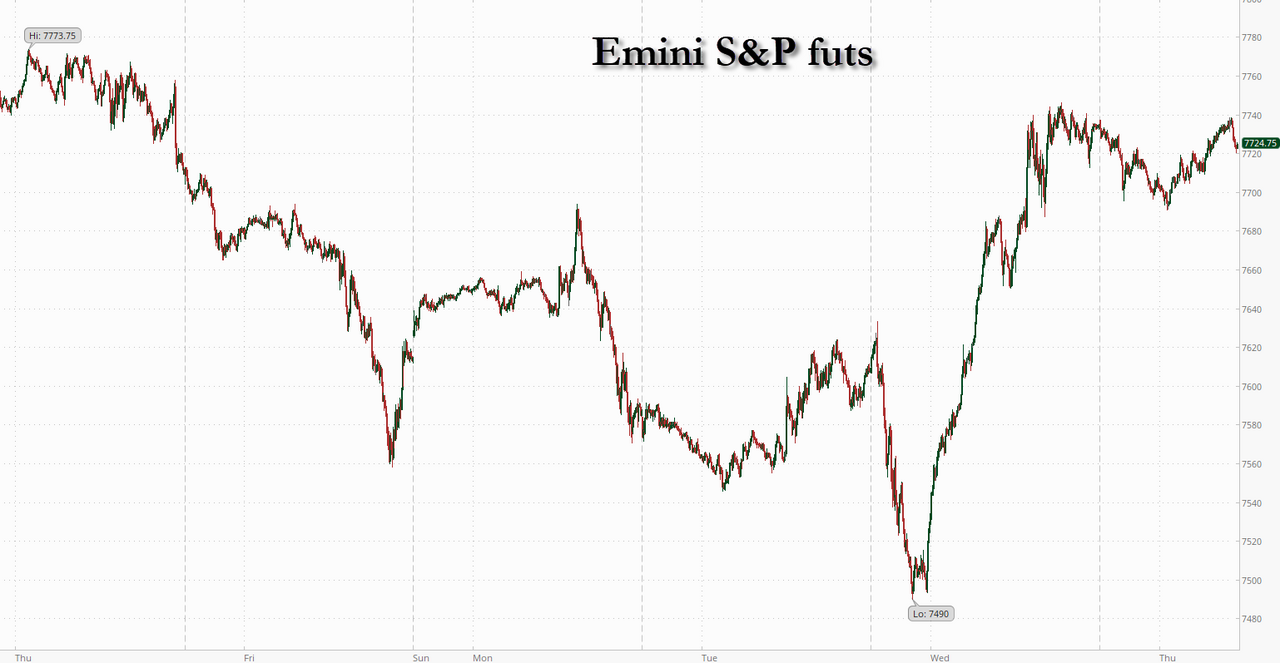
US index futures showed a mixed performance as the post-midterm rotation away from semiconductor equities and artificial intelligence sectors extended into a second consecutive session. Nasdaq futures fell 0.5 percent while S&P 500 futures edged up 0.1 percent, Dow futures advanced 0.7 percent, and Russell 2000 futures gained 0.4 percent. Qualcomm plummeted 10 percent following disappointing financial projections, dragging the SOXX ETF down 2 percent in premarket trading, while the Kospi index crashed nearly 6 percent. Meanwhile, crude oil staged a modest recovery from the previous session's sharp decline. The Bank of England raised interest rates by 25 basis points to 4 percent in an 8-1 vote, marking its first hike in three years. Bond markets extended their strong rally, with the benchmark 10-year Treasury yield dropping to 4.83 percent earlier before stabilizing at 4.87 percent. Democratic control of both congressional chambers spurred concerns over tighter data center regulations, driving capital away from chip builders while mega-cap tech stocks saw divergent trading results.
AI 시장 분석
Semiconductor and AI sectors faced a correction for two consecutive days in the wake of the Democratic landslide (Blue Wave) in the US midterms, with Nasdaq futures falling 0.5%. Meanwhile, the Bank of England (BoE) raised interest rates by 25 bps to 4%, and the 10-year Treasury yield declined to 4.87%. Investors should pay attention to the tightening of data center regulations and the possibility of fiscal contraction, responding to the differentiation market between mega-cap tech stocks and the semiconductor supply chain.
상승 영향
- Bonds — Expectations for reduced fiscal spending grew following the midterm election results, causing the 10-year Treasury yield to fall (bond prices to rise) and drawing in buying pressure.
- Banks — The Bank of England (BoE) raised its benchmark interest rate by 25 bps to 4%, raising expectations for improved net interest margins (NIM).
하락 영향
- Semiconductors — Concerns over stricter data center regulations surfaced due to Democratic control of Congress, combined with Qualcomm's sluggish earnings outlook, hitting the SOXX ETF with a 2% drop.
- AI — Selling pressure concentrated on AI infrastructure and computing supply-related stocks due to concerns over a moratorium on new data center expansion following the Blue Wave.
DYAX 전담 분석
Democratic control of Congress heightened concerns over stricter data center regulations, acting as direct selling pressure on semiconductor and AI infrastructure-related stocks, such as the SOXX ETF falling 2% in pre-market trading and Qualcomm plunging 10% on weak guidance. Conversely, the 10-year Treasury yield touched 4.83% before declining, reflecting expectations of a slowdown in fiscal spending, while the BoE's rate hike impacted the pound and the banking sector.
The actual passage intensity of future regulatory bills and the stabilization of Treasury yields are key indicators that will determine the direction of the stock market. While the semiconductor sector may continue its weakness due to additional regulatory concerns, a two-way scenario coexists where stabilized declining interest rates could draw bargain hunting into growth stocks overall.
AI가 생성한 분석으로 투자 자문이 아닙니다.
DYAX Investor Sentiment
Bullish (Long) 33% · Bearish (Short) 67%
426 participants
Related News
- Microsoft (MSFT) EVP and CEO of Consumer AI unit Suleyman says supports OpenAI transparency initiative and will share common evaluation sets pre‑training process
- Retirement Funds Keep Buying Semiconductor ETFs Despite Market Slump
- Jim Cramer Issues Significant Signal to Google Stock Investors
- Taiwan Evaluates Margin Cut to Stem Sell-Off, While US Watches Megaspeed
- Berkshire Hathaway's Hidden Artificial Intelligence Exposure
- [분석] 카디프 인수부터 시너지까지...그룹 최고 ’효자’ 한투증권 ’WM 전문성’ 발휘 기회
