Oil Prices Surge as US Deploys 10K Additional Troops and Third Carrier to Middle East Following Trump Threat
ZeroHedge ·
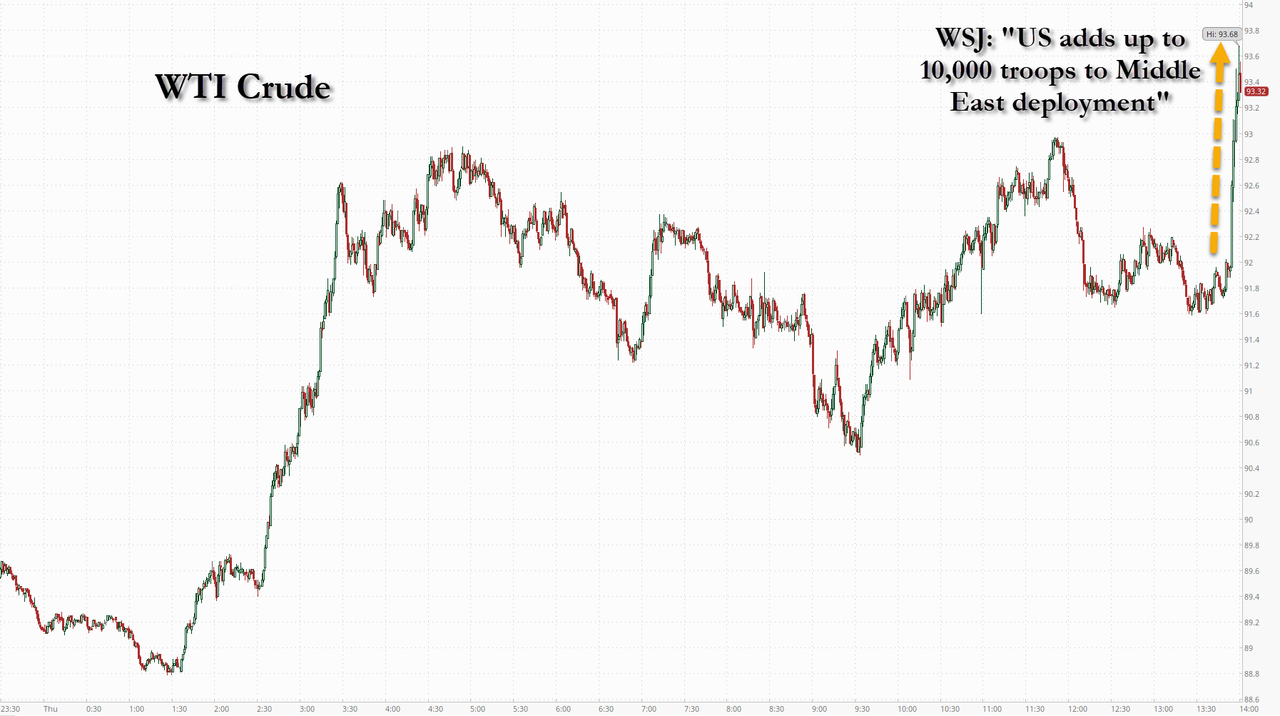
Crude oil prices soared following reports that the Pentagon is dispatching a third aircraft-carrier strike group and extra Marine Corps vessels to the Middle East, along with an additional 9,000 to 10,000 troops. According to The Wall Street Journal, these forces, including jet fighters and naval personnel, will reach the region by the end of November. The deployment follows President Trump's rejection of Iran's recent seven-day ceasefire proposal and hints of potential renewed strikes against Iran following the midterm elections. This build-up adds to the more than 50,000 U.S. service members already stationed in the area. The USS Theodore Roosevelt is heading to the U.S. Central Command region to relieve the USS George Washington, though both carriers could potentially remain deployed simultaneously for an extended period. Naval officials noted that the crew is bracing for a longer-than-usual mission. The deployment intensifies pressure on the U.S. Navy amid ongoing tensions with Iran, which has recently fired ballistic missiles at American warships, triggering a sharp upward reaction in energy markets.
AI 시장 분석
Crude oil prices spiked as the U.S. decided to deploy 10,000 additional troops and a third aircraft carrier strike group to the Middle East. Geopolitical tensions reached a peak after President Trump hinted at a possible strike against Iran following the midterm elections and rejected a truce proposal. Such concerns over supply disruptions and the risk of military conflict are acting as direct downward pressure on global financial markets.
상승 영향
- Energy — Deepening Middle East geopolitical risks and additional U.S. troop deployments amplify supply disruption concerns, directly increasing upward pressure on oil prices.
- Defense — Expectations for orders for defense contractors rise due to heightened military tensions between the U.S. and the Middle East and plans to deploy additional weapons.
하락 영향
- Airlines — Surging oil prices driven by geopolitical crises increase jet fuel cost burdens and deteriorate operational efficiency due to restricted passage through Middle Eastern airspace.
- Shipping — Intensification of Middle Eastern conflicts threatens the safety of major maritime transport routes, increasing operating costs through route detours and higher insurance premiums.
DYAX 전담 분석
The Pentagon's additional troop deployment and carrier strike group deployment to the Middle East heighten the risk of physical blockades on oil shipping routes such as the Strait of Hormuz, stimulating supply instability in the oil market and triggering a surge in oil prices. The shipping and aviation industries are hit directly by soaring fuel costs and surging expenses due to route detours.
Key variables ahead are whether an actual armed conflict with Iran will occur and the possibility of a blockade of the Strait of Hormuz. If it escalates into an all-out war, an additional surge in crude oil and a sharp decline in the overall stock market are expected, so the price trend of Brent crude and U.S. military movement indicators must be closely monitored.
AI가 생성한 분석으로 투자 자문이 아닙니다.
DYAX Investor Sentiment
Bullish (Long) 27% · Bearish (Short) 73%
376 participants
Related News
- IRNA Rejects Reports on IAEA Inspector Return While Markets Monitor Supply and Labor Updates
- US Treasury Secretary Bessent Urges Europe to Expedite Diesel Supplies Amid Shortage
- Super-Tanker Carrying 2.5 Million Barrels Struck Near Oman Coast
- BoC's Rogers Stresses Comprehensive Strategy for Housing Affordability
- UK Ministers Plan Welfare Overhaul Including Disability Benefit Scrapping
- Trump Highlights Rapid Price Drops as WTI Crude Settles Higher at $92.87
