Uranium Term Prices Hit A Record... So Why Is Nuclear Getting Nuked?
ZeroHedge ·
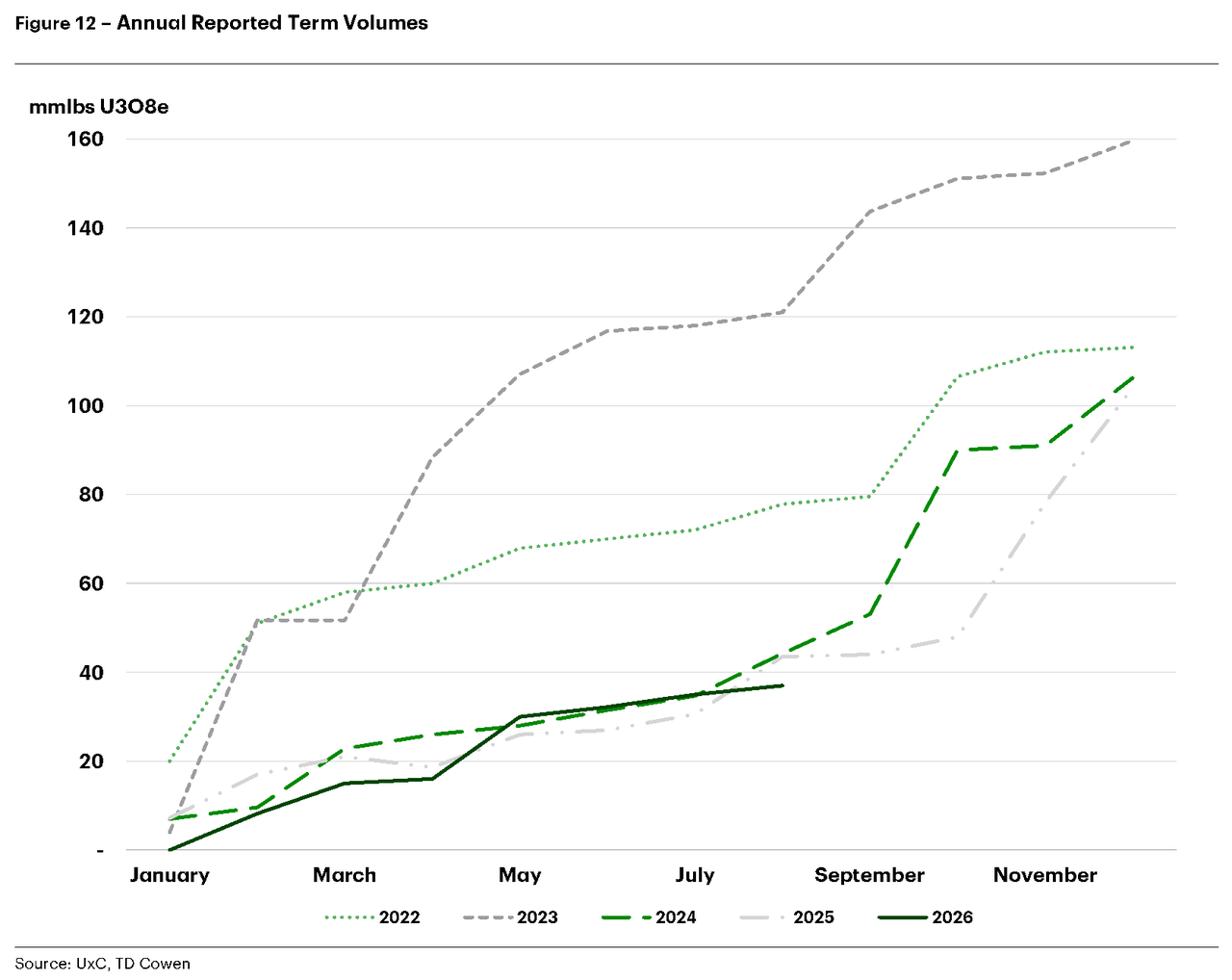
According to TD Cowen, long-term uranium prices have climbed to an all-time high of $96 per pound, surging approximately 12% year-to-date and surpassing the previous peak of $95 per pound set in mid-2007. Spot prices have similarly advanced to about $90 per pound, gaining roughly 11% this year. Despite these robust commodity fundamentals, nuclear equities, SMR darlings, and the IPO pipeline are moving in the opposite direction amid questions over massive capital expenditures and AI power demands. By September 15, term contracting volumes reached 42.2 million pounds, narrowing the year-over-year shortfall to about 3%. Nevertheless, utilities are experiencing severe sticker shock from the record prices, making them noticeably reluctant to commit to meaningful new long-term contracts in the near term.
AI 시장 분석
Uranium long-term contract prices reached an all-time high of $96 per pound, but nuclear and SMR-related stocks are instead on a downward trend. This is because utilities, burdened by the soaring prices, are hesitant to purchase, leading to a decrease in trading volume. This divergence between commodity prices and the stock market calls for investors to be cautious of increased short-term volatility.
상승 영향
- Commodities — Long-term uranium prices have hit a record high of $96 per pound and spot prices remain around $90, driving the upward trend of the commodity itself.
하락 영향
- Nuclear — Utilities are experiencing price resistance and sticker shock at uranium prices reaching all-time highs, making them reluctant to buy and causing nuclear and SMR-related stocks to fall.
- Utilities — Short-term profitability pressure and uncertainty are growing due to soaring fuel costs and heavy capital expenditure burdens.
DYAX 전담 분석
Despite uranium long-term prices rising about 12% year-over-year to $96 per pound and spot prices also recording $90, related stock prices are showing a downward trend due to utilities' avoidance of purchases and sluggish trading volume. Despite the long-term growth driver of increasing AI power demand, short-term cost burdens and capital expenditure concerns are acting as downward pressure on stock prices.
As a future scenario, stock prices could turn bullish again if utilities begin accepting the high prices and contract volumes rebound, but if purchase delays persist, there is a risk of further correction. Key indicators to watch are the long-term contracting volume in Mlbs and additional contracting trends in the utility industry.
AI가 생성한 분석으로 투자 자문이 아닙니다.
DYAX Investor Sentiment
Bullish (Long) 62% · Bearish (Short) 38%
449 participants
Related News
- BoE Governor Bailey Warns of AI Market Shocks While EU Questions Binance
- European Steel Exports Slump by 20% Amid Historic Low Production and Surging Energy Costs
- Iraq's Hezbollah Brigades Order Suspension of Military Operations Amid Mixed Markets
- US Senate Approves Keith Sonderling as Labor Secretary
- China Signals Proactive Fiscal Policy and Domestic Demand Boost as Toyota Plans $1.34Bln Argentina EV Investment
- Japan's Kihara Notes Tankan Sentiment Aligns with Government Outlook
