The Five-Year Fuel Crisis: Why The World Economy Is Paying For A War It Thinks Is Ending
ZeroHedge ·
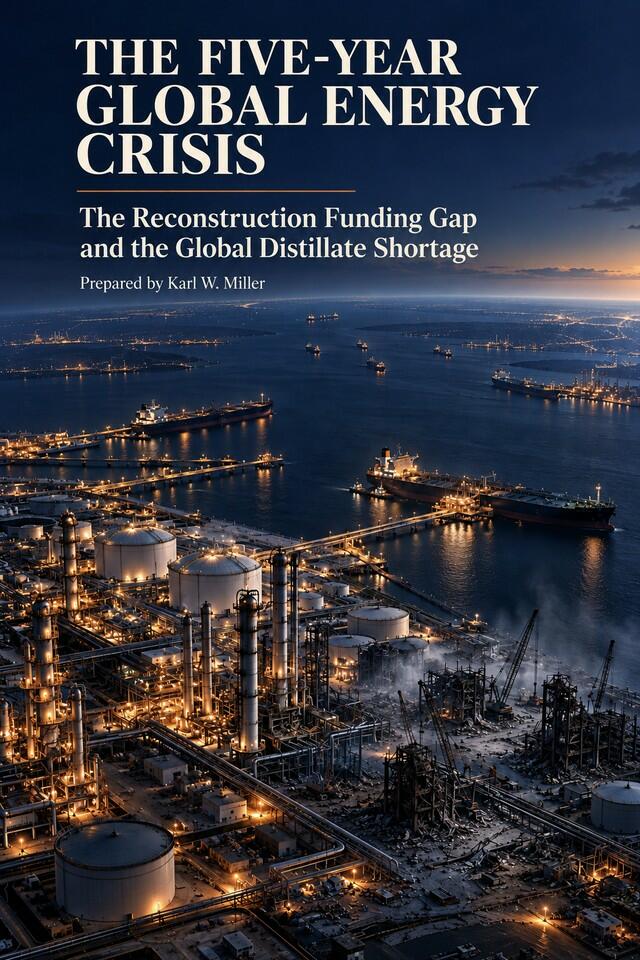
According to Karl W. Miller's latest analysis, the damage inflicted on Gulf energy infrastructure represents a multi-year reconstruction challenge rather than a temporary price spike. While a ceasefire can instantly reopen maritime routes, it cannot immediately manufacture vital equipment or deploy qualified engineers. Miller's financial model indicates that total program funding for rebuilding the system ranges from $1.16 trillion under an aggressive case up to $2.53 trillion under prolonged stress. Due to tight global markets for specialized machinery and labor, the weighted average timeline for these repairs spans nearly five years, with only 60 percent of the restoration projected to finish by 2031. Finance ministries globally must confront the reality that fuel shortages will persist long after hostilities cease.
AI 시장 분석
A global energy crisis has emerged as the destruction of Gulf energy infrastructure is expected to require up to $2.53 trillion in recovery costs over the next five years. Even with a ceasefire declaration, restoring damaged facilities will take years, directly leading to fuel shortages and rising costs in the global economy. Investors must prepare for long-term energy supply shortages and intensified competition for related equipment, beyond short-term price volatility.
상승 영향
- Energy — The destruction of Gulf energy infrastructure and the long-term recovery process are expected to deepen global fuel supply shortages, leading to rising energy prices and benefits for related companies.
- Oil — Concerns over a 5-year energy crisis and supply disruptions increase earnings improvement and upward stock price pressure for crude oil and refined product companies.
하락 영향
- Airlines — Long-term fuel supply shortages and sustained high oil prices sharply increase airlines' operating costs, directly hitting profitability.
- Chemicals — Long-term increases in energy and fuel prices raise production cost burdens for chemical companies, causing margin contraction.
DYAX 전담 분석
It is analyzed that restoring the energy infrastructure destroyed by the Middle East war will require a massive capital of up to $2.53 trillion and an average period of over five years. This increases upward pressure on fuel prices across global supply chains, placing a heavy burden on the overall economy.
The bullish scenario is the alleviation of supply shortages through rapid infrastructure recovery and successful alternative energy investments, while the bearish scenario is the entrenchment of high oil prices and inflation due to delayed recovery caused by shortages of equipment and skilled labor. Key indicators to watch are the progress of Gulf energy facility restoration and global refined oil inventory levels.
AI가 생성한 분석으로 투자 자문이 아닙니다.
DYAX Investor Sentiment
Bullish (Long) 59% · Bearish (Short) 41%
369 participants
Related News
- India September HSBC Composite PMI Final Prints at 55.90 Amid Key Market Updates
- India HSBC September Services PMI Final Prints at 55.2
- BoJ Officials Show Caution Regarding October Rate Hike Amid Call for More Data
- Solid 10-Year JGB Auction Results and Latest Middle East Updates
- Iran Army Highlights Missile Upgrades as US-Iran and Israel-Lebanon Talks Take Focus
- Lebanon and Israel to Hold Military Talks in Florida Ahead of Vote
