EU Escalates Tensions with Beijing through Broad Chinese Import Restrictions
ZeroHedge ·
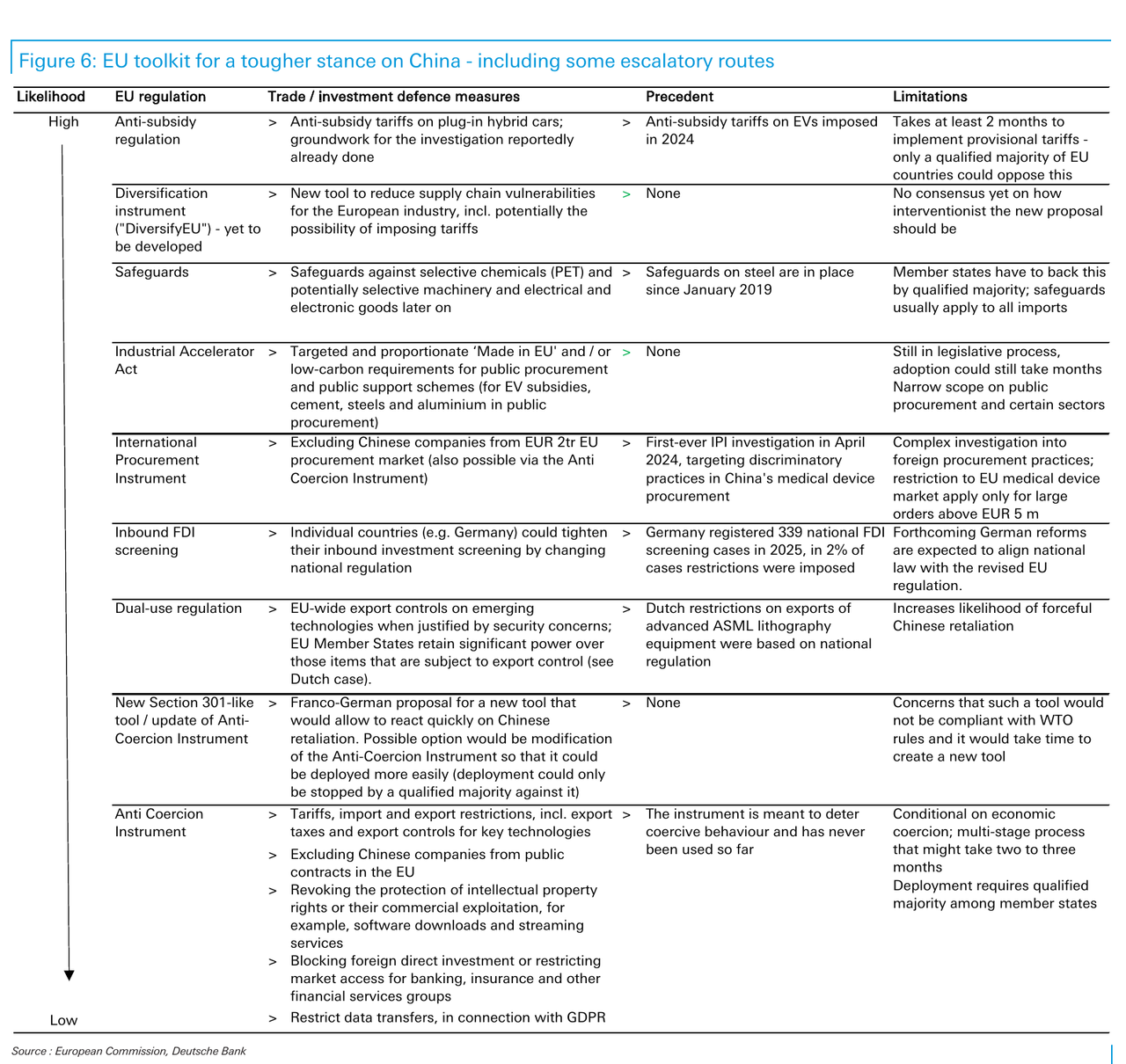
Europe's political leadership is aggressively pursuing broader curbs on Chinese imports as right-wing electoral gains highlight mounting public frustration over deindustrialization and declining domestic manufacturing. According to Bloomberg, Brussels is preparing to restrict incoming shipments of chemicals, furniture, and machinery from China to tackle the staggering $404 billion trade deficit and safeguard local enterprises. European Commission President Ursula von der Leyen recently confirmed that additional safeguard measures are in the pipeline to respond directly to the demands of domestic industries. This initiative follows previous announcements regarding a cap on Chinese hybrid vehicles slated for December, designed to protect the struggling European automotive sector as companies like VW implement massive layoffs. EU Trade Chief Maroš Šefčovič is scheduled to engage in trade talks with Chinese officials early next year. However, Brussels must navigate this escalation cautiously to prevent Beijing from enacting retaliatory export restrictions on critical materials and permanent magnets, balancing political survival with economic interdependence.
AI 시장 분석
In response to a $404 billion trade deficit and deindustrialization, the EU is pushing for broad import regulations on Chinese chemical products, furniture, machinery, and hybrid vehicles. This is part of a political survival strategy to protect collapsing European domestic manufacturing and automotive industries. While the measure aims to ease restructuring pressures on companies like Volkswagen, it carries the risk of Beijing's retaliatory actions and restrictions on critical raw material exports.
상승 영향
- Automobiles — As the EU pushes to introduce a cap on Chinese hybrid vehicles and implement import regulations in December, collapsing European automakers like Volkswagen can escape price competition pressure and defend market share.
- Chemicals — With the EU preparing broad import restrictions on Chinese chemical products, European chemical manufacturers hit by low-cost offensives will receive direct benefits, allowing earnings and market share to rebound.
하락 영향
- Technology — If trade conflicts with China escalate and Beijing restricts exports of critical raw materials and permanent magnets in retaliation, it will lead to production disruptions and increased costs across European manufacturing relying on these parts.
- Shipping — Strenthening trade barriers and expanding import regulations between the EU and China will cause a decline in bilateral trade volume, exerting downward pressure on cargo volume and freight revenue in the shipping and logistics industry.
DYAX 전담 분석
The EU's expansion of import regulations against China could act as short-term defensive momentum for the stock prices of European domestic manufacturing and automotive sectors. Attempts to reduce the $404 billion trade deficit serve as a factor supporting the valuations of beneficiary industries.
In a bullish scenario, regulations succeed and profit margins of European manufacturers recover, but in a bearish scenario, costs could surge due to China's retaliation via export restrictions on rare earths and permanent magnets. Key indicators to watch are the trends in EU-China trade negotiations and changes in employment and earnings of major corporations like Volkswagen.
AI가 생성한 분석으로 투자 자문이 아닙니다.
DYAX Investor Sentiment
Bullish (Long) 54% · Bearish (Short) 46%
351 participants
Related News
- Yemeni Warnings on Aramco Facilities and Market Impact
- Iran Excludes Nuclear File from Tehran Talks, Rejects Dialogue Until US Meets Demands
- Vessel Explosion Reported Off Iraq Coast as Crude Markets Weigh Geopolitical Risks
- Texas Instruments Launches USD-Denominated Four-Part Bond Offering
- Brazilian Treasury Cancels Inflation-Linked Bond Auction Set for October 27
- Why Goldman Sachs Expects the Fed to Skip an Interest Rate Hike in October
