US Missile Stockpiling Hindered by Critical Mineral Vulnerabilities
ZeroHedge ·
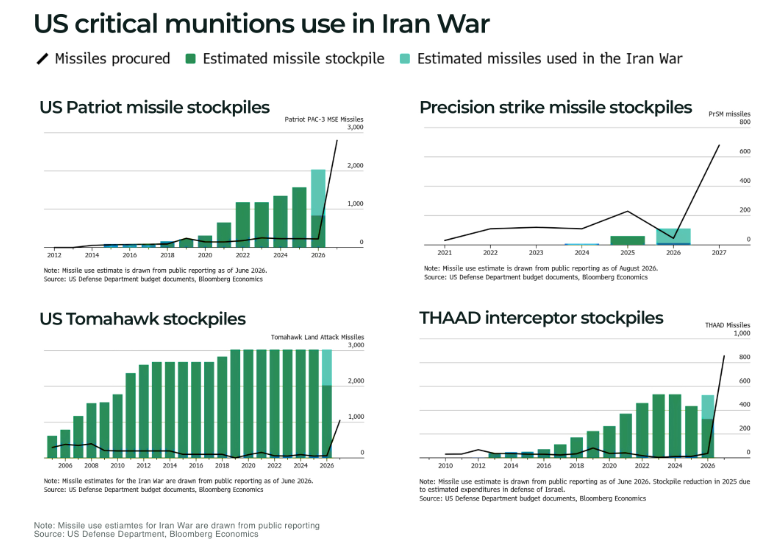
During the first 16 days of the Iran conflict, coalition forces consumed an estimated 4,000kg of tungsten merely to replenish expended gun ammunition, yet US domestic mines produced zero output in 2025 while China controlled 79% of worldwide tungsten mine production. According to a RUSI analysis, over 11,000 munitions were expended during this brief window. Restoring these military arsenals demands secure access to essential critical minerals ranging from antimony and copper to rare earths and titanium. Experts emphasize that the West's heavy reliance on Chinese supply chains exposes a profound endurance crisis in defense manufacturing, shifting the focus of military readiness directly to the control of raw material replenishment.
AI 시장 분석
The U.S. faces a severe risk of weapons stockpile depletion, having consumed over 11,000 rounds of ammunition during a mere 16-day conflict with Iran. Notably, reliance on China for critical minerals such as tungsten reaches 79%, raising growing concerns over supply chain disruptions. This is expected to pose a significant burden on the production sustainability of the defense industry as a whole.
상승 영향
- Defense — Long-term orders and production expansion for defense companies are expected due to the depletion of weapon stockpiles by the U.S. and Western allies and the surge in demand for inventory replenishment.
하락 영향
- Stock Market — Deepening reliance on China for critical minerals and supply chain crises causing defense industry production disruptions and cost increase pressures act as an overall economic risk.
DYAX 전담 분석
During the first 16 days of the Iran war, 4,000 kg of tungsten was consumed solely for bullet replenishment, while U.S. mine production in 2025 was zero. The supply chain vulnerabilities of critical minerals such as gallium, tungsten, and graphite are direct causes of delaying the defense industry's weapon inventory replenishment.
The bullish scenario involves the U.S. government's subsidies for critical mineral self-sufficiency and accelerated domestic mine development, benefiting related mineral stocks. The bearish scenario entails continued Chinese mineral export controls, leading to weapon production disruptions and surging costs, deteriorating defense stock profitability. Key indicators to watch are the U.S. Department of Defense's critical mineral reserves and China's mineral export control policies against the U.S.
AI가 생성한 분석으로 투자 자문이 아닙니다.
DYAX Investor Sentiment
Bullish (Long) 50% · Bearish (Short) 50%
426 participants
Related News
- Saudi-led Coalition Destroys Two Missile Launchers in Yemen's Sanaa
- Bolsonaro Challenges Brazilian Election Results as Global Markets React to Economic and Political Shifts
- Brazil's Lula Secures Re-Election as Markets Monitor Digital Regulation and Regional Updates
- PBoC Injects CNY 454B via Reverse Repos Amid Routine Liquidity Management
- Riyadh Explosion Reports Emerge as Markets Monitor Middle East Tensions and Global Events
- Saudi Civil Defence Confirms Danger Has Passed in Riyadh
