US September Payrolls Surge Down to 29K as Prior Months Face Steep Revisions
ZeroHedge ·
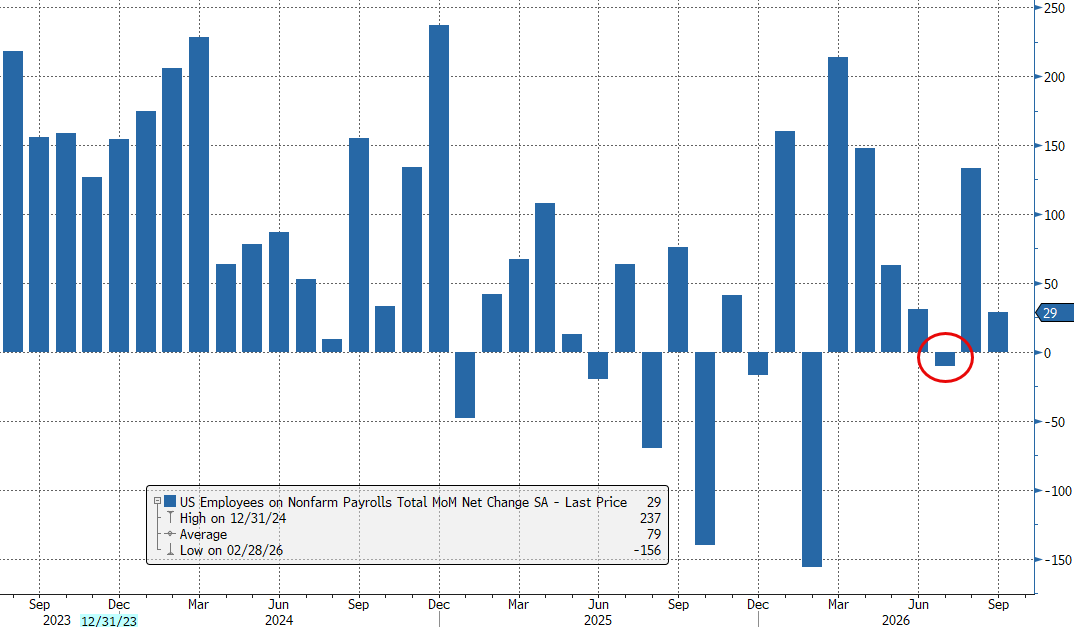
The latest US employment report delivered a massive shock to the market as September nonfarm payrolls plummeted to just 29,000, falling well below every analyst estimate. Compounding the disappointment, historical data saw substantial downward revisions: August employment was marked down from 162,000 to 133,000, while July figures were slashed from a positive 21,000 to a negative 10,000. Combined, July and August job creations were reduced by 60,000. Following the weaker-than-expected labor data, Treasury yields dropped sharply from 5.22% to a weekly low of 5.16% amid an aggressive bond short squeeze. Despite the low headline payroll print, the unemployment rate ticked up from 4.1% to 4.2%, with the total number of unemployed individuals climbing by 78,000 to 7.109 million. Interestingly, the household survey revealed a robust 406,000 surge in actual employed workers, marking the second-highest increase since January 2025 and providing a complex picture of the broader labor economy.
AI 시장 분석
September nonfarm payrolls significantly missed expectations with a meager increase of 29K, and figures for July and August were heavily revised downward, clearly signaling a cooling labor market. Consequently, Treasury yields plummeted from 5.22% to 5.16%, triggering a sharp short squeeze in the bond market. The unemployment rate rose slightly to 4.2%, driven by a combination of factors including an increase in labor force participants. Investors should focus on growth stocks and bonds as expectations for Federal Reserve rate cuts intensify.
상승 영향
- Bonds — Weak employment data and falling Treasury yields (from 5.22% to 5.16%) drove bond prices higher, triggering a short squeeze.
- Growth Stocks — Slowing job growth eases concerns over further Fed rate hikes, reducing discount rate pressures and benefiting tech and growth stocks.
- Real Estate — Expectations of stabilized borrowing rates following the decline in Treasury yields reduce financing costs, favoring the real estate sector.
하락 영향
- Banks — The plunge in Treasury yields and growing likelihood of future rate cuts lead to compressed net interest margins (NIM), negatively impacting bank profitability.
- Consumer Goods — The sharp drop in nonfarm payrolls and the rising unemployment rate (4.2%) directly lead to declining household income and weaker consumption, weighing on consumer goods companies.
AI가 생성한 분석으로 투자 자문이 아닙니다.
DYAX Investor Sentiment
Bullish (Long) 59% · Bearish (Short) 41%
326 participants
Related News
- G7 Leaders Pledge Refinery Coordination and Reaffirm Commitment Against Energy Export Bans
- G7 to Release Massive Diesel Reserves, Says Macron
- Macron Agrees to Coordinate Actions for Hormuz Strait Supplies
- Fed's Logan Skips Policy Remarks at Dallas Fed Migration Event
- US August Factory Orders ex-Transportation Up 0.3% and Macron Announces Strategic Oil Release
- US August Factory Orders Rise 0.1% Matching Expectations
