NY Fed Survey Shows One-Year Inflation Expectations Hit Three-Year High
ZeroHedge ·
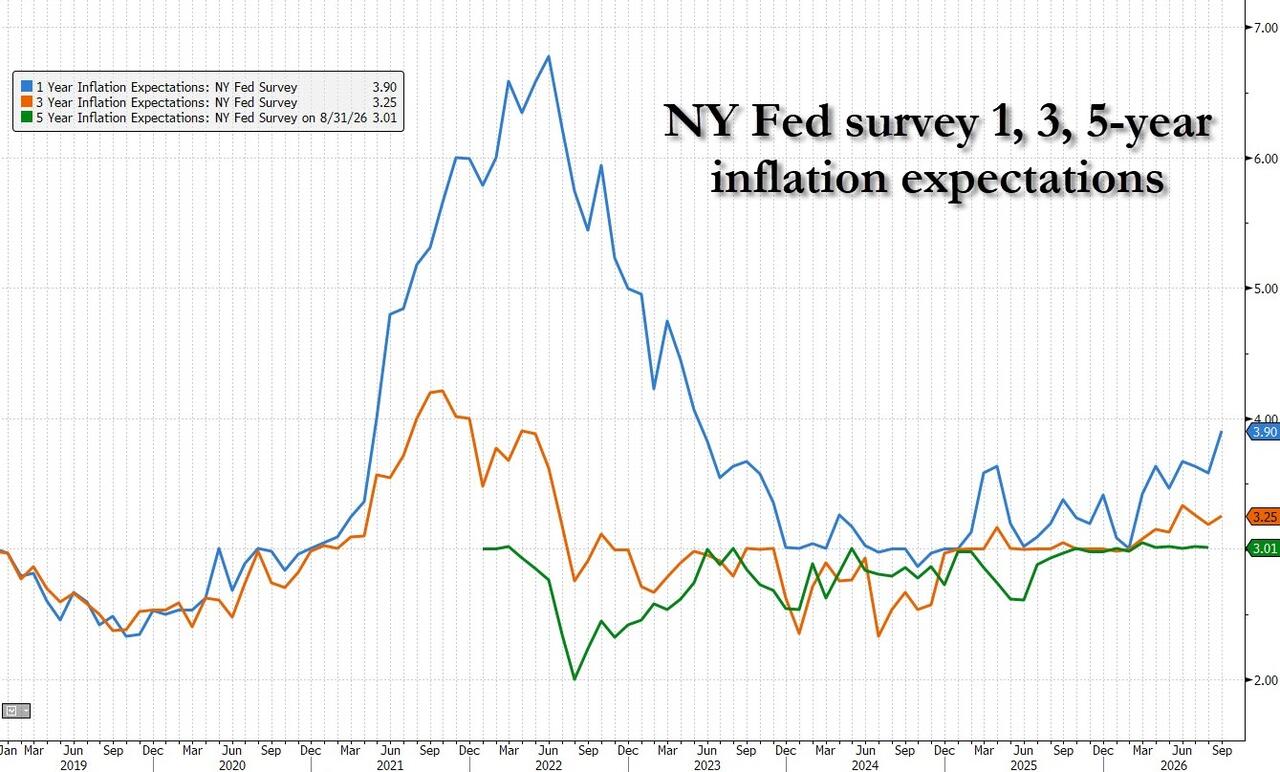
Short-term inflation expectations among Americans surged last month, reaching their highest level since May 2023, while labor market sentiment showed signs of improvement, according to the latest consumer expectations survey released by the Federal Reserve Bank of New York on Wednesday. Consumers' median inflation expectations for the one-year horizon climbed to 3.9% in September, up from 3.6% in the previous month. Meanwhile, the three-year inflation outlook ticked up 0.1 percentage point to 3.3%, and the five-year projection remained steady at 3.0%. Over the coming year, respondents anticipate gasoline prices to increase by 4.8%, food by 5.5%, medical costs by 9.2%, college tuition by 7.5%, and rent by 6.8%. Alongside the worsening inflation outlook, labor market perceptions brightened as workers reported lower probabilities of job loss and higher chances of voluntarily quitting their positions.
AI 시장 분석
According to the NY Fed consumer survey, one-year short-term inflation expectations hit 3.9%, the highest since May 2023. Consumer inflation concerns grew as expectations for price increases in major daily necessities like gasoline, food, and medical care expanded. On the other hand, labor market indicators improved, lowering expectations of rising unemployment and increasing the probability of voluntary quits. This entrenchment of inflation expectations is expected to act as downward pressure on the Federal Reserve's monetary policy and the financial markets overall.
상승 영향
- Banks — Rising inflation expectations and the possibility of prolonged high interest rates create a favorable environment for defending Net Interest Margin (NIM), raising expectations for improved profitability.
- Commodities — As inflationary pressures mount and consumer expectations for rising prices expand, hedging demand for raw materials and real assets increases.
하락 영향
- Equities — One-year inflation expectations hit a three-year high of 3.9%, weakening interest rate cut expectations and acting as downward pressure on overall stock market valuations.
- Bonds — Concerns over entrenched inflation increase upward pressure on Treasury yields, raising the risk of falling bond prices.
- Real Estate — Persistent high borrowing costs, such as mortgage rates, lead to lower housing affordability and a contraction in transactions.
- Consumer Goods — As expectations for rising living costs like food, medical care, and rent grow, real incomes decline and households' discretionary spending capacity shrinks.
AI가 생성한 분석으로 투자 자문이 아닙니다.
DYAX Investor Sentiment
Bullish (Long) 57% · Bearish (Short) 43%
448 participants
Related News
- US Treasury Chief Bessent Frames High Yields as Global While Trump Links Mortgage Rates to War End
- Syrian Petroleum Company Reports Pipeline Sabotage in Country's Northeast
- France Releases 10 Million Barrels of Diesel Reserves to Lower Fuel Prices
- Trump Downplays Russia Lab Death as Bioweapon, Market Impact Subdued
- Houthi Forces Claim Attacks on Saudi Military Sites
- EU Conditions Further Oil Reserve Releases on IEA Energy Security Clearance
