US PMI Surveys Point to Q3 Growth Rebound and Global Outperformance
ZeroHedge ·
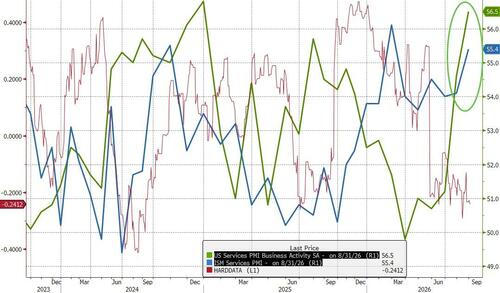
Following mixed manufacturing data earlier in the week, US service sector surveys for August delivered stronger-than-expected results, placing the American economy ahead of its global peers. The S&P Global US Services PMI climbed to 56.5 from 54.6, reaching its highest level since December 2024. Simultaneously, the ISM Services PMI rose to 55.4, beating forecasts and hitting a peak not seen since February 2026. Combined, the S&P Global US Composite PMI advanced to 56.0 in August from 54.5 in July, marking a 52-month high. Usamah Bhatti, economist at S&P Global Market Intelligence, noted that private sector growth has shifted gears, with survey data currently indicating a robust annualized GDP growth rate of 3.0% for the third quarter, a sharp acceleration from the previous quarter's 1.5%. Although new business intakes and employment figures showed a welcome boost alongside easing concerns over the Middle East conflict, supply delays—particularly for manufacturers—and elevated price pressures remained above historical averages.
AI 시장 분석
The US August S&P Global Services PMI rose to 56.5 and the ISM Services PMI to 55.4, revising the Q3 GDP growth forecast upward to 3.0%. The strong economic rebound and employment growth centered on the service sector demonstrate the resilience of the US economy, outperforming global peers. However, manufacturing supply delays and persistent price pressures could burden the Fed's monetary policy path.
상승 영향
- US Stock Market — Expectations for improved corporate earnings have increased as the August Composite PMI hit a 52-month high of 56.0 and Q3 GDP growth is projected at 3.0%.
하락 영향
- Bonds — Stronger-than-expected economic growth alongside persistent manufacturing supply delays and price pressures weakens expectations for aggressive Fed rate cuts, putting downward pressure on bond prices.
DYAX 전담 분석
The US August Composite PMI hit 56.0, the highest in 52 months, easing concerns over economic slowdown and stimulating risk-on sentiment. Robust economic growth leads to improved corporate earnings, which is positive for the stock market. However, supply chain delays and residual price pressures may limit rate cut expectations, putting downward pressure on the bond market.
The bullish scenario is that robust consumption and employment induce a soft landing and drive cyclical stocks higher, while the bearish scenario is that concerns over an inflation rebound cause the Fed to maintain a hawkish stance, leading to rising interest rates. The trends of future supply chain indicators and employment reports must be closely monitored.
AI가 생성한 분석으로 투자 자문이 아닙니다.
DYAX Investor Sentiment
Bullish (Long) 41% · Bearish (Short) 59%
511 participants
Related News
- Amazon.com (AMZN): AI Exposure Adds, But Other Businesses Drive Results
- Tesla Advances 6% as Traders Await Cybercab Event, Lucid Rises 3%, Rivian Ticks Up
- Cypress Creek Energy's Ostrea Solar Reaches Commercial Operation, Helping Power Nation's Fastest-Growing State Economy
- PayPal Holdings Cuts Approximately 220 Jobs in India to Streamline Operations
- Netflix Stock Rebound Fuels Ad Growth Talk: A Sign of More Upside?
- Tesla’s Impossible Comeback
