Main Street-Wall Street Divide Hits Record High as UMich Inflation Concerns Re-Accelerate
ZeroHedge ·
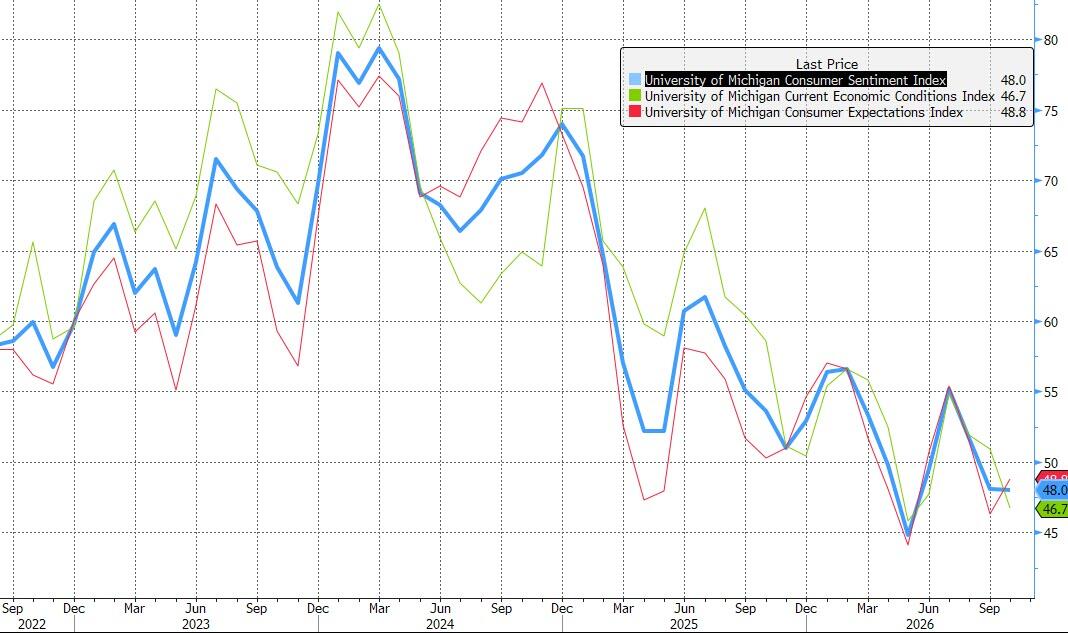
The preliminary October University of Michigan consumer sentiment index edged down by a slight 0.1 points from September. Both short- and long-term inflation expectations climbed for the second consecutive month, reaching their highest marks since May at 4.7% and 3.5%, respectively. The proportion of consumers citing high prices as a drag on personal finances rose to 56%, up from 45% in January. Specifically, the durable goods buying conditions subindex plummeted 18% due to elevated interest rates and affordability issues. Meanwhile, the S&P 500 Total Return Index on Wall Street surged to record highs, contrasting sharply with depressed Main Street sentiment as measured by the UMich index, driving the gap between financial markets and everyday consumers to an unprecedented peak.
AI 시장 분석
While the University of Michigan's preliminary October consumer sentiment index fell 0.1 points from the previous month, showing a slowdown, 1-year and long-term inflation expectations rose to 4.7% and 3.5%, respectively. While Wall Street's S&P 500 hit all-time highs, Main Street's consumer sentiment remains sluggish, widening the divergence. High interest rates and rising prices caused durable goods purchase conditions to plummet by 18, increasing consumers' financial burden.
하락 영향
- Consumer Goods — Durable goods purchase conditions plummeted 18% due to high rates and lower purchasing power, and 56% of consumers reported worsening finances from inflation, expecting a hit to sales.
- Stock Market — As long-term inflation expectations rose to 3.5% and consumer sentiment worsened, the divergence between the real economy and asset markets grew, potentially dampening overall investment sentiment.
DYAX 전담 분석
Re-accelerating consumer inflation expectations and a decline in purchasing power deepen concerns over prolonged high interest rates, acting as downward pressure on the stock market overall and the consumer goods sector. With 56% of consumers experiencing worsening financial conditions due to high prices, the risk of a real economy slowdown is growing.
The bull case is the continued strength in asset markets driven by sustained expectations of Fed rate cuts, while the bear case is the entry into a consumption cliff due to entrenched high inflation. Attention must be paid to upcoming retail sales indicators and finalized inflation expectations.
AI가 생성한 분석으로 투자 자문이 아닙니다.
DYAX Investor Sentiment
Bullish (Long) 42% · Bearish (Short) 58%
325 participants
Related News
- Brazil FinMin Durigan Hints at 2027 Subsidy Extension Amid High Brent Prices
- Zelensky Confirms Trilateral US-Russia-Ukraine Talks Set for Early November Amid Middle East Tensions
- UKMTO Reports Tanker Struck Near Oman Amid Wider Geopolitical Developments
- Turkish FM Rejects Further Iran Strikes as Geopolitical Tensions Persist
- Trump Administration to Challenge Alaska Senate Race Certification Over Name Confusion
- Spot Gold Dips Under USD 4,000 as Equity Futures Face Mild Pressure
