Markets Do Not Wait for the Federal Reserve
ZeroHedge ·
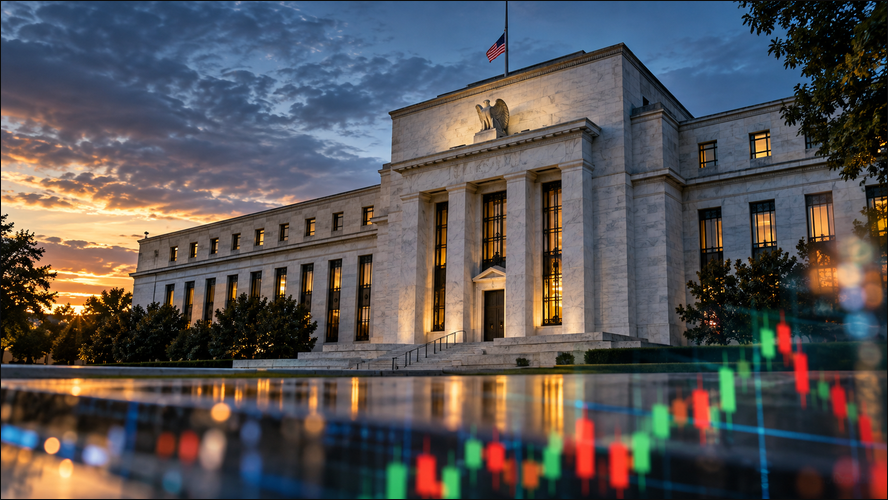
Financial commentary often portrays monetary policy as a mechanical process where Federal Reserve actions directly dictate borrowing costs. However, historical evidence reveals a far more complex reality. Beginning in June 2004, the Fed raised its federal-funds target 17 consecutive times, lifting the rate from 1 percent to 5.25 percent. Despite this aggressive tightening, the 10-year Treasury yield averaged 4.73 percent in June 2004 and stood at 4.72 percent by February 2007. Former Fed Chair Alan Greenspan famously labeled this unexpected divergence a conundrum, and subsequent Fed research confirmed that long-maturity yields frequently declined during tightening cycles. This distinction is vital for investors, homeowners, and enterprises because actual borrowing costs are driven by market rates, which incorporate inflation expectations, economic growth forecasts, and future policy anticipation. A 10-year Treasury yield is fundamentally different from an overnight rate, reflecting broader market sentiment and term premiums long before central bank interventions officially materialize.
AI 시장 분석
Despite the Federal Reserve raising benchmark interest rates 17 consecutive times from 1.0% to 5.25% starting in 2004, the 10-year Treasury yield paradoxically fell from 4.73% to 4.72%. Financial markets do not mechanically follow the Fed's decisions, but rather determine long-term yields by preemptively reflecting expectations for inflation and economic growth. Investors should focus on actual borrowing costs and shifts in market expectations rather than simple benchmark rate announcements.
상승 영향
- Bonds — The market preemptively reflects Fed policy, causing long-term Treasury yields to fall even during benchmark rate hike cycles, acting as a driving factor for rising bond prices.
- Growth Stocks — If long-term yields fall independently of the Fed's benchmark rate path, the burden of the discount rate decreases, positively impacting valuations.
하락 영향
- Banks — When benchmark rates are cut or long-term yields fall, net interest margins face compression pressure, which can negatively impact net interest income and profitability.
DYAX 전담 분석
The disconnect between the Fed's overnight benchmark rate hikes and the market's 10-year Treasury yield proves that financial markets are not mechanical. The mystery of why long-term yields fell during the 2004 tightening cycle despite the Fed raising rates by 4.25 percentage points is because the market preemptively prices in future growth and inflation. Investors must analyze bond market reactions and expected inflation alongside Fed announcements.
During future monetary policy announcements, market yields may move contrary to the Fed's direction, so investors should monitor 10-year Treasury yields and term premium indicators. In a bullish scenario, the market may price in rate cuts early, sustaining strength in bonds and growth stocks, while in a bearish scenario, investors must prepare for increased volatility driven by expectation gaps.
AI가 생성한 분석으로 투자 자문이 아닙니다.
DYAX Investor Sentiment
Bullish (Long) 40% · Bearish (Short) 60%
346 participants
Related News
- US Demands Iranian Delegation Departure Amid Key Financial Data Releases
- US Treasury Auctions Short-Term Bills and GM Reports Q3 Deliveries
- German Chancellor Merz Cites Russian Hybrid Threat, Honda Reports Strong US Sales
- Canada to Fast-Track West Coast Crude Pipeline Approval to Cut US Reliance
- BT Seeks State Nod for TalkTalk Acquisition Amid US Treasury Auction Plans
- US Treasury Announces October Note and Bond Auction Schedule Alongside Buyback Plan
