USAF 'Nuclear Sniffer' Jet Spotted Near Taiwan Strait
ZeroHedge ·
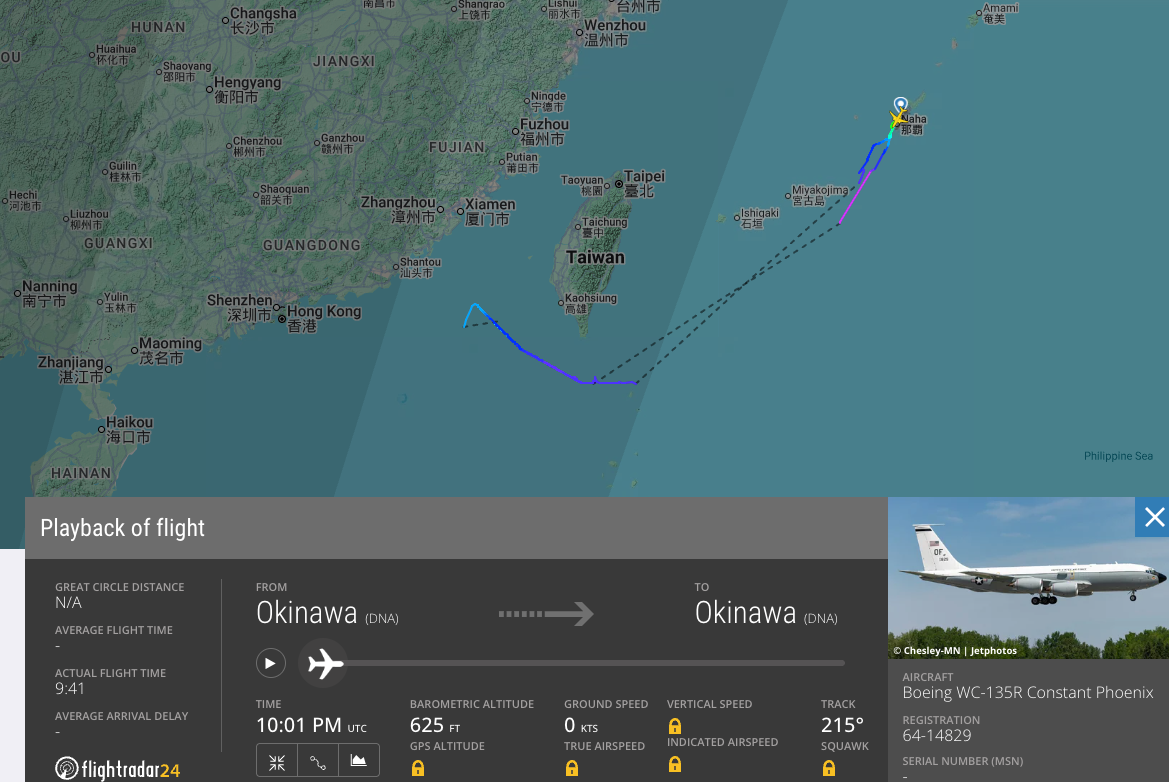
A United States Air Force WC-135R Constant Phoenix aircraft, widely recognized as a nuclear sniffer, was identified near the Taiwan Strait southwest of Taiwan on Sunday. The specialized military plane gathers airborne gases and particles to track radioactive signatures. Its trajectory appeared on flight-tracking systems while China conducted unannounced naval drills simulating a blockade and assaults on Taiwan. Flightradar24 logs indicated the aircraft executed a round-trip journey from Okinawa, passing south of the island into southwestern waters near the strait. Although the exact objective remains unverified and the plane does not directly pinpoint warheads or underground sites, the deployment coincides with heightened regional tensions over potential supply chain disruptions. The WC-135R routinely conducts global atmospheric sampling operations. Meanwhile, President Donald Trump is slated to land in Shenzhen, China, late Wednesday for the upcoming APEC summit.
AI 시장 분석
Geopolitical tensions escalated as the US Air Force's nuclear radiation sniffer aircraft, the WC-135R Constant Phoenix, was spotted near the Taiwan Strait. This, combined with China's military drills simulating a blockade and strikes on Taiwan, is amplifying concerns over global supply chain disruptions. Investors must closely monitor the ripple effects of security risks in East Asia on the financial markets.
상승 영향
- Defense — Elevated US-China military tensions around the Taiwan Strait and China's blockade drills are increasing defense spending and demand for defense stocks.
하락 영향
- Shipping — Military drills and blockade concerns in the Taiwan Strait cause maritime logistics disruptions and shipping delays, leading to rising costs and operational disruptions for the shipping industry.
- Stock Market — Intensifying geopolitical risks dampen global investor sentiment and spread risk-off behavior, exerting downward pressure on the overall stock market.
- Consumer Goods — The threat of supply chain disruptions in the Taiwan Strait disrupts global logistics and distribution, leading to rising costs and deteriorating profitability for consumer goods companies.
DYAX 전담 분석
The flight of the US military reconnaissance plane near the Taiwan Strait and China's unannounced military drills are maximizing military tensions surrounding the strait, directly reflecting fears of shipping and logistics disruptions into asset markets. In particular, geopolitical risks arising from a core chokepoint of global supply chains are factors that increase shipping rate volatility and stimulate risk-off sentiment.
While risk premiums will dissipate and markets will stabilize if the level of military confrontation subsides in the future, global stock markets and shipping stocks will face additional downward pressure if it leads to physical clashes or a blockade. Investors should monitor changes in Taiwan Strait traffic volume and price volatility in the defense and shipping sectors as key indicators.
AI가 생성한 분석으로 투자 자문이 아닙니다.
DYAX Investor Sentiment
Bullish (Long) 51% · Bearish (Short) 49%
533 participants
Related News
- Japan Q3 Private Consumption Drops, Misses Forecasts Amid Soft GDP
- Japan Q3 External Demand Shrinks as GDP Growth Flatlines
- Japan Q3 Capex Rises 1.6% While Overall GDP Stagnates
- Japan Q3 GDP Growth Flat at 0.0% Prelim, Missing Market Expectations
- Japan Q3 GDP Price Index Prelim Rises 2.4 Percent, Misses Expectations
- Japan Q3 GDP Annualized Prelim Contracts as Growth Misses Forecasts
