Carney Reveals He Prepared for 'Extreme Tail Risk' of US Invasion Under Trump
ZeroHedge ·
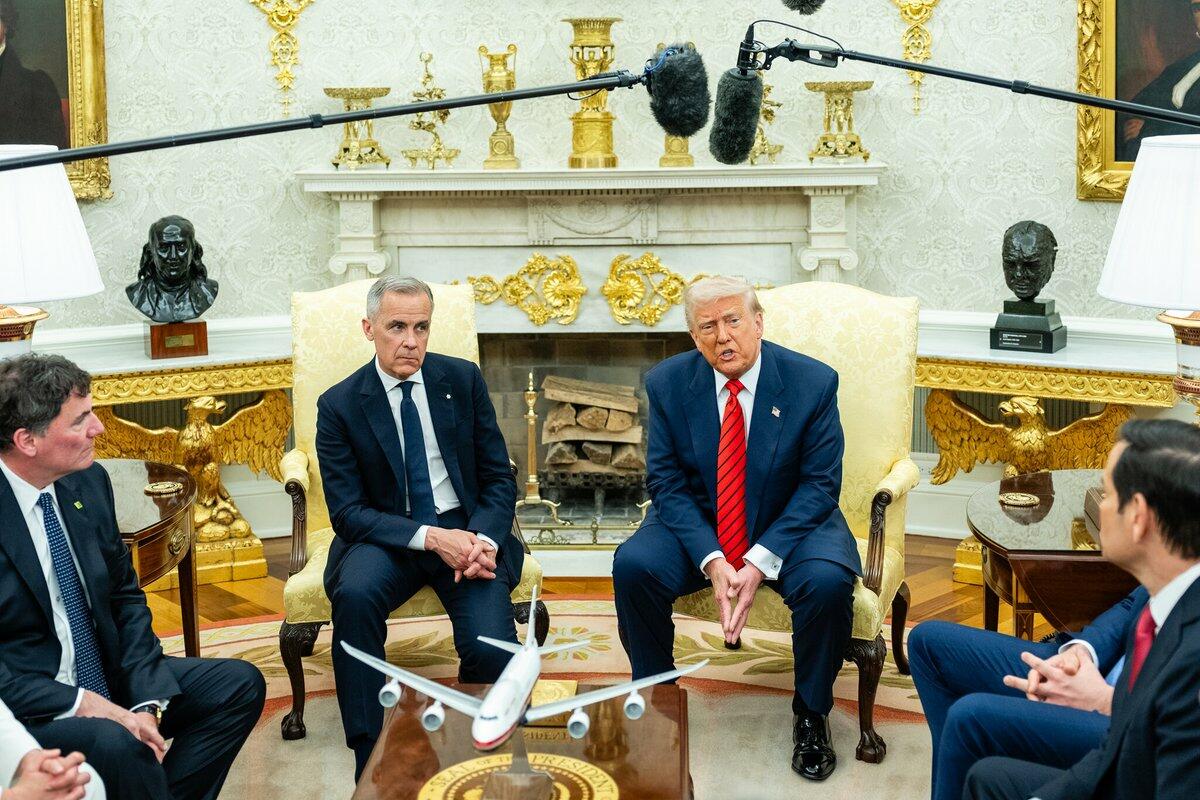
In a startling revelation that highlights ongoing trade tensions, Canadian Prime Minister Mark Carney disclosed in a New York Times interview published Wednesday that he had prepared for the "extreme tail risk" of a United States military invasion. Carney faced repeated provocations from President Trump during his initial year in office, including remarks in the Oval Office suggesting Canada could become America's 51st state and referring to Carney as "governor." While acknowledging it was not a base case, Carney stressed that professional risk management demands evaluating such extreme scenarios. Observers note this may mark the first time a contemporary Canadian leader has openly contemplated a potential US military takeover. This bold stance follows Carney's recent remarks criticizing Canada for relying too complacently on historical economic integration with Washington over the past four decades.
AI 시장 분석
Canadian Prime Minister Mark Carney mentioned in a New York Times interview that preparations were made for the extreme tail risk of a U.S. invasion under the Trump administration, revealing severe trade and geopolitical tensions between the two nations. These unprecedented remarks undermine confidence in the stability of North American economic integration and increase uncertainty in both financial markets. Investors need to prepare for asset volatility driven by potential trade friction and deepening geopolitical risks.
상승 영향
- Defense — Heightened geopolitical tensions and security concerns between the U.S. and Canada can directly lead to increased defense spending and benefits for the defense industry.
- Gold — Extreme political conflict and the emergence of tail risks between the U.S. and Canada can stimulate safe-haven demand, driving up gold prices.
하락 영향
- Canadian Stock Market — Concerns over weakened economic integration with the U.S. and geopolitical risks dampen investment sentiment among Canadian companies and exert downward pressure on the stock market.
- Currency (CAD) — Deepening trade conflicts and political friction between the two countries reduce confidence in the Canadian dollar, potentially causing currency weakness.
DYAX 전담 분석
Prime Minister Mark Carney's mention of a U.S. invasion goes beyond a simple joke, signaling cracks in the North American economic alliance and acting as downward pressure on Canadian-related assets and exchange rates. In particular, concerns over tariffs and weakened economic integration could directly impact the value of the Canadian currency and the profitability of import-export companies.
A bullish scenario is that the remarks remain mere political rhetoric and trade negotiations resume smoothly, while a bearish scenario is that geopolitical conflicts lead to actual trade retaliation. Key monitoring indicators are the CAD exchange rate and news on bilateral trade policies.
AI가 생성한 분석으로 투자 자문이 아닙니다.
DYAX Investor Sentiment
Bullish (Long) 50% · Bearish (Short) 50%
242 participants
Related News
- Japanese Officials Signal End of Easy Money Era Amid Global Bond Selloff
- Japan Finance Minister Katayama Defers to BoJ on Policy Tools, Avoids FX Commentary
- Australia Auctions AUD 1 Billion in 2030 Bonds as Goldman Revises USD/JPY Forecasts
- Brazilian Leader to Approve Debt Restructuring and Gambling Ban, Global Diplomacy Unfolds
- Saudi Arabia, Turkey and Pakistan to Hold Urgent Military Talks Under Joint Defence Pact
- Asia-Pac Equities Open Mixed in Holiday-Thinned Trade as Oil and Yields Rise
