Brent Crude Hits Six-Month High at $118 on Gulf Escalation Fears Ahead of US Midterms
ZeroHedge ·
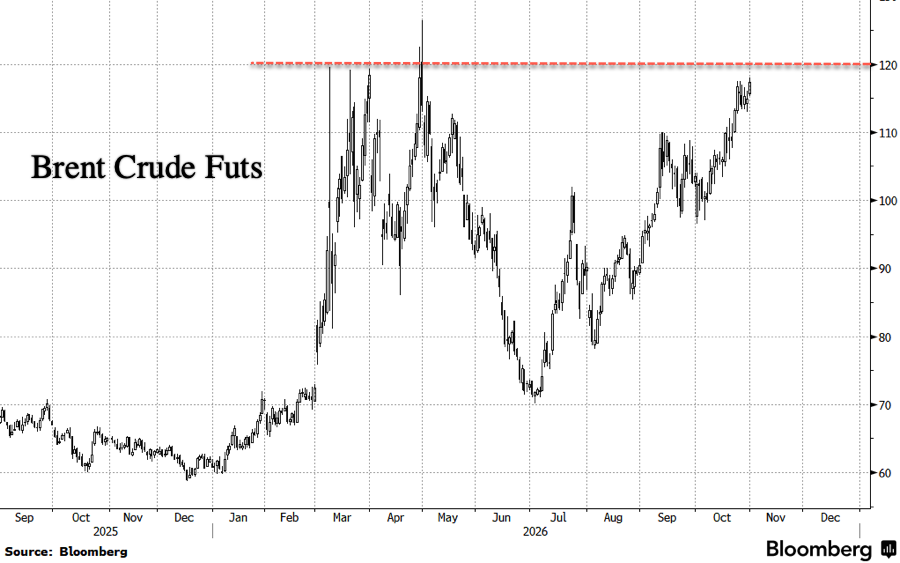
Brent crude futures for January delivery surged to touch $118 a barrel early Friday, marking a six-month high as continuous attacks on commercial ships in the Strait of Hormuz and Saudi energy facilities fueled anxiety over a potential escalation in the Gulf following next week's US midterm elections. According to a Wall Street Journal report, President Trump receives ongoing briefings regarding military options against Iran and has indicated that a brief offensive could follow Tuesday's vote. JPMorgan energy analyst Natasha Kaneva noted that her current model values Brent near $94, significantly below current market levels. Bloomberg reporter Rebecca Feng warned that global on-land oil inventories remain near their lowest points since at least 2016, leaving the world with minimal defense against further supply disruptions. Meanwhile, Morgan Stanley analysts pointed out that total market supply trails last year's figures, even as Kpler ship-tracking data indicates Gulf export volumes have surpassed prewar levels of 23.3 million barrels per day.
AI 시장 분석
Brent crude futures for January delivery hit a six-month high of $118 per barrel, driven by attacks on merchant ships in the Strait of Hormuz, strikes on Saudi energy facilities, and rising tensions in the Gulf following the US midterm elections. As global crude inventories fell to their lowest level since 2016, market anxiety over supply disruptions is growing. Investors must thoroughly prepare for increased energy price volatility stemming from geopolitical risks.
상승 영향
- Energy — Ship attacks in the Strait of Hormuz and strikes on Saudi energy facilities have heightened concerns over supply disruptions, pushing Brent crude to a six-month high of $118 per barrel.
- Defense — Heightened military tensions between the US and Iran, alongside reports of the Trump administration considering military options, benefit defense-related stocks.
하락 영향
- Airlines — The surge in oil prices directly leads to higher jet fuel costs, which are a core expense for airlines, severely worsening profitability.
- Shipping — Attacks on merchant vessels in the Strait of Hormuz and expanding geopolitical risks create operational disruptions and the burden of soaring fuel costs.
- Chemicals — Rising crude oil prices increase raw material cost burdens for petrochemical companies, leading to margin compression.
- Automobiles — Rising energy costs act as inflationary pressure, dampening consumer sentiment for car purchases and increasing production costs.
- Consumer Goods — Increases in logistics and production costs driven by rising oil prices negatively impact the profitability of overall consumer goods companies.
AI가 생성한 분석으로 투자 자문이 아닙니다.
DYAX Investor Sentiment
Bullish (Long) 53% · Bearish (Short) 47%
362 participants
Related News
- Qatari Mediators Arrive in Tehran as Diplomatic Efforts Continue
- Chilean Copper Output Plunges 15.1% Year-on-Year in September
- Mexico Q3 Prelim GDP Rises 0.9% QoQ as Global Economic Data Releases Roll In
- Mexican GDP Growth Misses Expectations as Global Economic Data Unfolds
- Brazil September Unemployment Prints at 5.2% Matching Expectations
- Goldman Sachs Predicts November Rate Hike for Sweden, Freeze for Norway
