Iran War 3.0: Where Did This All Go Wrong?
ZeroHedge ·
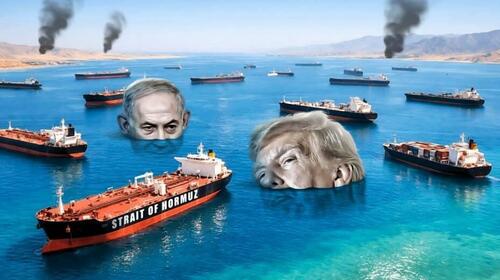
Iran War 3.0: Where Did This All Go Wrong? Authored by Alastair Crooke When the US Navy, in co-ordination with Qatar and Oman, tried to slip a convoy of four vessels through the Strait of Hormuz, via Omani waters, last Tuesday night – rather than pass via Iran’s officially approved route – Trump may have imagined (or been told) that with the massive funeral for the late Supreme Leader Ali Khamenei under way , that Iran would not react as the US Navy attempted to force open an American corridor . Trump however, misread the Iranian jibe – Hormuz is its “atomic weapon.” Iran will not relinquish it. Trump insists – in clear contradiction to the terms set out in paragraph five of the MoU – that Iran has no right to interfere with any ship trying to transit the Strait of Hormuz. Iran nonetheless is acting within the terms of the agreed de-escalation framework, and has warned repeatedly that it would strike any vessel circumventing the Iranian control mechanism. Iran responded directly to Trump’s challenge to Iranian control of the Strait by striking two vessels with missiles and a third with an armed drone. A forth Qatari-owned tanker, laden with liquefied natural gas, was set ablaze, forcing its crew to abandon the stricken vessel. These Iranian ripostes provoked Trump to order American air strikes against Iranian targets; to reimpose sanctions on the Islamic Republic’s oil exports; and to revoke the MoU framework he had signed with what he called the “Iranian scum” – thus ending the ceasefire. “We hit them hard last night,” Trump said at the NATO summit in Ankara. “We will probably hit them hard again tonight.” Trump did hit Iran again Wednesday night – even though Iran had not attacked another vessel seeking to by-pass the Iranian corridor. In response, Iran launched ballistic missiles and drones at US bases in Kuwait, Bahrain, the UAE and Muwaffaq Al-Salti airbase in Jordan. Vice-President Vance is saying to Iran, “If you try to close the Strait of Hormuz, the America
AI 시장 분석
Military conflict between the U.S. and Iran over the Strait of Hormuz is intensifying, causing rapid instability in the Middle East. Geopolitical risk has reached its peak following Iran's tanker attacks, U.S. retaliatory airstrikes, and Iran's ballistic missile launches against U.S. bases. Concerns over oil supply chain disruptions are becoming reality, likely maximizing volatility in global financial markets.
상승 영향
- Crude Oil — Concerns over supply shortages due to a potential blockade of the Strait of Hormuz and damaged supply chains are driving a high probability of surging oil prices.
- Defense — Rising military tensions in the Middle East are expected to drive increased defense spending and demand for weaponry, benefiting defense contractors.
하락 영향
- Airlines — Airlines face significantly deteriorating profitability due to the burden of soaring jet fuel costs and operational disruptions on Middle Eastern routes.
- Global Stock Markets — The spread of geopolitical risk dampens investor sentiment and triggers a flight-to-quality, leading to a broad decline in equity markets.
DYAX 전담 분석
The escalation of tensions in the Middle East creates immediate pressure on energy prices and global trade logistics. The potential for a prolonged blockade of the Strait of Hormuz suggests that crude oil premiums will remain elevated. Investors should prepare for a flight-to-safety trend as the geopolitical environment worsens.
AI가 생성한 분석으로 투자 자문이 아닙니다.
DYAX Investor Sentiment
Bullish (Long) 44% · Bearish (Short) 56%
454 participants
Related News
- ASML·인플레이션 완화·실적 발표 - 시장을 움직이는 요인들
- Europe markets ease as geopolitical risks offset softer U.S. inflation
- Polish Inflation Rate YoY Final (Jun) Y/Y 2.5% vs. Exp. 2.5% (Prev. 3.1%)
- Polish Inflation Rate MoM Final (Jun) M/M -0.5% vs. Exp. -0.5% (Prev. -0.3%)
- 노르웨이 6월 근원 인플레이션 2.7% 하락, 예상치 하회
- EUROPEAN OPEN: ASML NA raises guidance; RIO LN Q2 copper output falls; CFR FP sales beat; DHER GY confirms UBER talks; BOL FP interest in LION; ROP SW unveils Alzheimer’s trial