IRS Keeps Overpayment and Underpayment Interest Rates at 7 Percent for Q4 2026
ZeroHedge ·
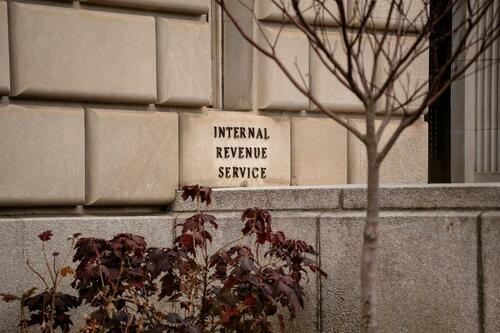
The Internal Revenue Service has confirmed that interest rates for tax overpayments and underpayments will remain unchanged at 7 percent for individual taxpayers during the fourth quarter of 2026. Announced from Washington on Jan. 6, 2026, these quarterly rates will become effective on Oct. 1. For corporate entities, the overpayment rate is set at 6 percent, dropping to 4.5 percent for any portion exceeding 10000 dollars. Meanwhile, the corporate underpayment rate mirrors individuals at 7 percent, whereas large corporate underpayments are subject to a 9 percent rate. All figures stayed steady compared to the third quarter. The calculation is derived from the July federal short-term rate of 4 percent, with standard additions of 3 percentage points for individual underpayments and overpayments, as well as corporate underpayments. Corporate overpayments generally add 2 percentage points to the baseline short-term benchmark, excluding large excess amounts.
AI 시장 분석
The U.S. Internal Revenue Service (IRS) announced that the interest rates for individual taxpayers' tax overpayments and underpayments will remain frozen at 7% for the fourth quarter of 2026. This rate was calculated by adding 3 percentage points to the federal short-term rate of 4%, maintaining the same level as the previous quarter. For corporations, the underpayment interest rate is set at 7% and at 9% for large corporations, making corporate financing costs and tax risk management increasingly important.
하락 영향
- Stock Market — As tax underpayment interest rates for individuals and corporations remain at 7-9%, the burden of tax costs increases, negatively impacting overall corporate profitability and cash flow.
DYAX 전담 분석
The IRS decision to maintain the 7% interest rate imposes a persistent financial cost burden on individual and corporate taxpayers for delayed tax payments. In particular, with the underpayment interest rate for large corporations reaching 9%, it acts as a direct pressure factor on corporate cash flows and tax planning.
Regarding future interest rate scenarios, the fluctuation trends of the federal short-term rate must be closely watched, and corporate profitability may diverge depending on the efficiency of tax management. Investors should closely monitor the size of companies' tax provisions and cash liquidity indicators.
AI가 생성한 분석으로 투자 자문이 아닙니다.
DYAX Investor Sentiment
Bullish (Long) 46% · Bearish (Short) 54%
286 participants
Related News
- US Navy Conducts First Live-Fire Missile Test with Saildrone USV
- Why Low-Cost Missiles Alone Cannot Form the Future of U.S. Arsenals
- Portable 1MW Kaleidos Microreactor Secures Critical Nuclear Fuel Deal Through 2030s
- Tehran Labels US Sanctions a 'Declaration of War' Against Global Community, Demands Worldwide Resistance
- Canada Signals Retaliatory Tariffs Against U.S. Following Breakdown of Trade Talks
- Canada-US Trade War Erupts as Washington Imposes 50% Tariffs on Canadian Goods
