Iran Warns of Faster and Heavier Retaliation Following Naval Clash with US
ZeroHedge ·
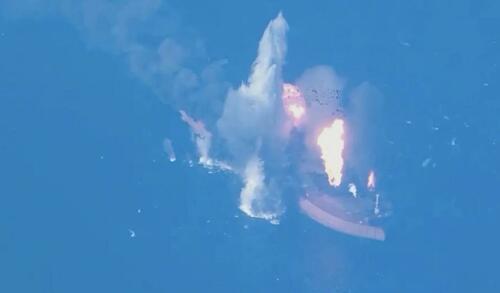
Iranian Parliament Speaker Mohammad Bagher Ghalibaf announced a hardened military stance on Sunday, threatening a swifter and more painful retaliation against any future United States military actions. Writing on Telegram, Ghalibaf declared that the rules of engagement have shifted permanently and that future violations of Iran's security will no longer face proportionate responses. The top lawmaker acknowledged that sweeping US-led economic sanctions have triggered severe domestic hardships, including high inflation, severe currency fluctuations, and mounting unemployment, urging technological innovation and boosted local manufacturing to counter these pressures. The escalation follows a weekend maritime confrontation where the Islamic Revolutionary Guard Corps claimed it targeted American vessels and oil tankers in the Strait of Hormuz. In addition, Iran asserted it struck an unmanned US craft, though American forces dismissed the claim as entirely false. Tensions peaked after US forces struck three Iranian oil tankers, identified as the M/T Downy, M/T Stark 1, and M/T Kylo, marking a significant escalation in targeting civilian vessels during the ongoing conflict.
AI 시장 분석
Iranian Parliament Speaker Mohammad Bagher Ghalibaf escalated military tensions by warning of faster and more painful retaliation following a naval clash with the U.S. military. Geopolitical risks in the Middle East are rapidly expanding due to attacks on warships and oil tankers in the Strait of Hormuz and the U.S. targeting of an Iranian oil tanker. Consequently, concerns over global energy supply disruptions and significant volatility across financial markets are projected to rise sharply.
상승 영향
- Defense — The intensification of military clashes between the U.S. and Iran and Iran's warnings of stern retaliation directly expand global defense spending and demand for defense stocks.
- Crude Oil — Attacks on oil tankers and military clashes in the Strait of Hormuz heighten concerns over crude oil supply disruptions, acting as a direct upward pressure on oil prices.
- Gold — Heightened geopolitical risks and expanded military tensions in the Middle East stimulate safe-haven sentiment, driving up gold prices.
하락 영향
- Stock Market — The armed conflict and fears of escalation between the U.S. and Iran stimulate risk-off sentiment in global financial markets, increasing downward pressure on the stock market overall.
- Airlines — Surging oil prices and potential route detours caused by the Middle East geopolitical crisis increase fuel cost burdens for airlines, deteriorating profitability.
- Shipping — Military clashes and increased navigation risks in the Strait of Hormuz cause disruptions in shipping routes and spikes in insurance premiums, acting as cost pressures.
AI가 생성한 분석으로 투자 자문이 아닙니다.
DYAX Investor Sentiment
Bullish (Long) 59% · Bearish (Short) 41%
437 participants
Related News
- Utah Valley University Faculty Emails Regarding Charlie Kirk Revealed
- Market Decoupling After the Fed and Key Macro Themes
- Why The Fed Rate Hike Fails To Fix Targeted Inflation
- Minneapolis Fed President Kashkari Says Inflation Remains Too High
- Good Intentions Paved The Road To The 2008 Financial Crisis
- Trump Scraps Arc de Triomphe Project in Favor of Drone Facility
